
Learning How to Properly Clean Your Fruits and Veggies is super important. Not only does it ensure sparkly cleanliness, free of dirt and debris, but also bacteria! Toooons of bacteria.
On Instagram whenever I post about how I clean my produce I get so many questions so I figured I’d do a blog post just to have it up here whenever someone new comes along who wants the low down.
Here’s the thing, cleaning your produce with just water is not cutting it no matter what you have, organic or not organic. Fruit is fruit and veggies are veggies. Some grow out of trees, bushes, and straight up from the dirt in the ground like potatoes.
Let’s not forget all the traveling these products do, from the hands that touch them, transport them, and pack them, to the barrels, trucks, planes, and everything in between they travel on. Crates, boxes, what have you. Don’t think for one second each of these things are white glove clean. Have you seen a fruit truck or fruit stand before?! Those things are filthy!!!
And then there are the bugs…mice, and other rodents. I can’t even deal with thinking about it. Being a germ phob my brain takes that extra extra step in thinking of almost every single scenario on how these things can be dirty and what on earth they come in contact with. So it’s always best to thoroughly clean your goods for your protection and health.
Getting sick off of dirty produce like lettuce is extremely common. You don’t have to be a meat eater to get a bacterial infection like E.coli. or any type of food poisoning. I have a very hard time eating salads out because I’m not sure if the establishment is cleaning their fruits and veggies properly and I don’t really want to take that chance. A couple of years ago I ate a salad out and got super sick. Being sick like that is dreadful. But not to worry, by following these 4 easy steps you’ll be an avid produce cleaner in no time. You can spread the word to friends and family too and be able to answer any questions that come your way! And hey, if you’re one of those people who like to gamble and eats your veggies with a sprinkle of tap water, that’s no prob! There’s nothing wrong with steering on the safe side when it comes to these things especially if you have little ones who gobble this stuff up like I do.
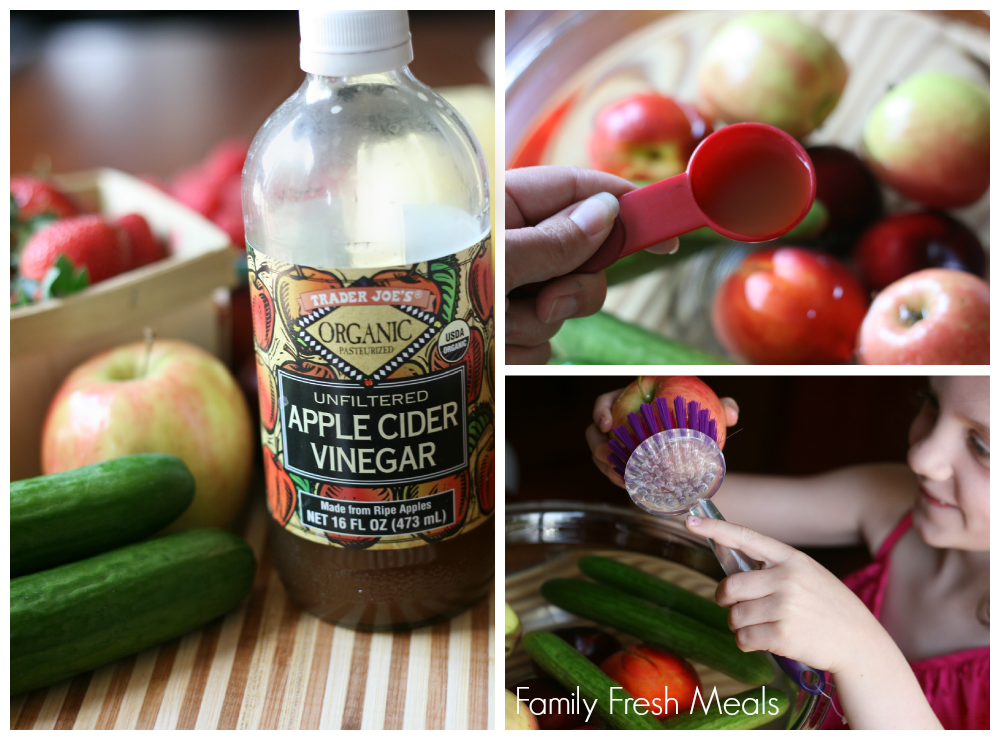
And that’s it! I typically don’t measure it, I just pour the ACV and baking soda in by eye. Too much won’t do any harm. I’m only giving measurements here so you have a guide. These measurements would be good for say 2 small containers of blueberries but use more if you have more in a bowl. Once I have it in the water I give it a good whirl with my finger or spoon and let it sit for 5 minutes. You can do this with any and all fruits and veggies. With potatoes I tend to let them sit for 5 then scrub them after because dirt of root veggies like that can be stubborn.
Pictured above you see how when adding the baking soda it fizzes up, it’s pretty cool.
Hey there, food lovers and kitchen warriors! If you’ve ever wondered, “Can I use apple cider vinegar to clean fruit?” then you’re in for a treat today. Spoiler alert: Yup, you absolutely can! It’s one of my fave hacks for getting those apples, berries, and peaches squeaky clean without any nasty chemicals. At our lil’ kitchen here, we’re all about keepin’ things natural and safe, especially when it comes to what we munch on. So, grab a cup of coffee (or a glass of ACV water if you’re fancy like that), and let’s dive into why and how apple cider vinegar (ACV, as I’ll call it) is a game-changer for cleaning your fruits.
Why Even Bother Cleaning Fruit with Apple Cider Vinegar?
Look, we all know fruits are straight-up nature’s candy But here’s the not-so-sweet part they often come coated with stuff you don’t wanna eat—pesticides, dirt, and even some sneaky bacteria Yuck, right? I ain’t about to let my family chomp on that mess, and I’m guessin’ you feel the same. That’s where ACV struts in like a superhero. It’s got this natural acidity that can zap germs and loosen grime, making your produce safer to eat. Plus, it’s cheap, easy to find, and ain’t loaded with the harsh stuff you see in store-bought washes. Let’s break down why I’m so hyped about it.
- It’s Natural, Baby: ACV is just fermented apple juice, no weird additives. I feel way better using this than some chemical spray.
- Budget-Friendly Vibes: A bottle of ACV costs pennies per use compared to fancy fruit cleaners. My wallet loves it.
- Gets the Job Done: That acidic punch helps cut through pesticide residue and knocks out a bunch of germs. Not all, but a solid chunk.
- Eco-Win: It’s biodegradable, so I’m not dumpin’ toxins down the drain. Mother Earth gives me a high-five for this one.
Now, before we get too excited, it ain’t perfect. There’s some stuff to watch out for, but I’ll get to that later. First, let’s talk about how to actually do this.
How to Clean Fruit with Apple Cider Vinegar: Step-by-Step
I’ve been using ACV to clean my fruits for years, and trust me, it’s easier than pie. Whether you’ve got sturdy apples or delicate strawberries, there’s a way to make this work. I’m gonna walk ya through two main methods I swear by, dependin’ on what kinda fruit you’re dealin’ with. Let’s get to it!
Method 1: The Soak-and-Rinse (Best for Small or Delicate Fruits)
This is my go-to for stuff like berries, grapes, or cherries—anything small or that can’t handle rough scrubbin’. Here’s how I roll
- Mix Up Your Magic Potion: Grab a big bowl or use your sink. Mix 1 part ACV with 10 parts water. So, like, if you’re using a cup of ACV, add 10 cups of water. I use filtered water when I got it, just to keep things extra pure.
- Dunk the Fruit: Gently plop your fruits in there. Make sure they’re all underwater, but don’t cram ‘em in if they’re super fragile like raspberries. Give ‘em space to breathe.
- Let It Soak: Set a timer for about 15-20 minutes. Some folks say 2-3 minutes is enough, but I like the longer soak to really let the ACV do its thang. It loosens dirt and fights off bacteria while I sip my coffee.
- Rinse Like Crazy: After soakin’, dump the fruit into a colander and rinse under cold running water. I mean, really rinse—don’t skimp here. You don’t want any vinegar taste hangin’ around.
- Dry ‘Em Off: Pat the fruit dry with a clean towel or let ‘em air dry on the counter. Wet fruit can get moldy quick, so don’t skip this. Then store as usual.
I’ve noticed after soakin’ you can legit see dirt and gunk floatin’ in the water. Kinda gross but also satisfying, ya know?
Method 2: The Spray-and-Wipe (Perfect for Bigger Fruits)
Got apples, pears, or peaches? I switch to this method ‘cause it’s quicker and works awesome on larger stuff. Here’s the deal:
- Make Your Spray Mix: In a clean spray bottle, mix 1 part ACV with 4 parts water. Shake it up real good. I sometimes toss in a splash of lemon juice for a lil’ citrus kick, but that’s optional.
- Spray Away: Put your fruit in a colander or on a clean surface in the sink. Spray all over, makin’ sure you hit every side. Don’t be shy—coat ‘em good.
- Let It Sit: Give it about 5 minutes to sit there. This lets the ACV break down any nasties on the surface.
- Rinse Thoroughly: Run cold water over each piece, rubbin’ gently with your hands to get rid of the vinegar solution and any loosened grime.
- Dry and Done: Same as before, pat dry with a towel or air dry before storin’ ‘em away.
This spray method is my jam when I’m in a rush. It’s fast, and I still feel like I’m givin’ my fruit a solid clean.
What Kinda Fruits Can You Clean with ACV?
Pretty much any fruit you’d rinse before eatin’ can handle an ACV wash. I use it on everything from tough-skinned stuff like apples and plums to softies like strawberries and blueberries. But there’s a couple things I keep in mind:
- Thick-Skinned Fruits: For stuff like bananas or oranges where I don’t eat the peel, I don’t always bother with ACV. A quick water rinse does the trick since I’m peelin’ ‘em anyway.
- Delicate Berries: With berries, I’m extra gentle. No heavy-handed soakin’ or they turn to mush. Short soak, light rinse, and I’m good.
- All Other Fruits: Peaches, nectarines, grapes—you name it, ACV works. Just adjust the method based on size and toughness.
One thing tho, if you’re dealin’ with super pricey or rare fruits, maybe test a small one first. I ain’t had issues, but better safe than sorry, right?
The Awesome Perks of Using Apple Cider Vinegar
I’m straight-up obsessed with ACV for cleanin’ fruit ‘cause it’s got so many wins. Here’s why I think it’s the bee’s knees:
- No Harsh Chemicals: I got kids runnin’ around, and the last thing I want is some toxic residue on their snacks. ACV keeps it natural and safe.
- Saves Me Cash: Why shell out for expensive fruit washes when a big ol’ bottle of ACV costs next to nothin’? I use it for cleanin’, cookin’, even hair rinses. Talk about multi-taskin’!
- Cuts Through the Bad Stuff: It’s pretty darn good at gettin’ rid of pesticide bits and bacteria on the surface. I feel better knowin’ my fruit’s cleaner.
- Easy-Peasy to Find: Every grocery store’s got it. No huntin’ down weird products for me.
- Good for the Planet: It breaks down naturally, so I ain’t hurtin’ the environment with nasty chemicals. Feels good to go green.
I remember the first time I tried this, I was skeptical as heck. But seein’ the gunk come off in the water? Man, I was sold. It’s been a staple in my kitchen ever since.
But Wait, There’s Some Downsides Too
I gotta keep it real with ya—ACV ain’t a magic bullet. There’s a few things that might bug ya, and I’ve run into these myself:
- Vinegar Smell Alert: It stinks a bit while you’re cleanin’. Like, open-a-window kinda stink. But don’t worry, it fades after a good rinse.
- Taste Risk: If you overdo the ACV or soak too long, some fruits—especially the delicate ones—might pick up a slight vinegar-y vibe. Stick to the ratios I mentioned, and you’ll be fine. I learned this the hard way with some strawberries once. Whoops!
- Not a Total Fix: It don’t get rid of every single germ or virus. It knocks out a lot, but ain’t no sterilizer. And if pesticides soaked deep into the fruit’s skin, ACV can’t touch that. Sometimes, peelin’ is still the way to go.
- Takes a Lil’ Time: Soakin’ for 15 minutes ain’t instant. If you’re in a hurry, it might feel like a hassle compared to just rinsin’ with water.
Still, for me, the pros way outweigh the cons. I just plan ahead a bit, and it’s no biggie.
Tips and Tricks I’ve Picked Up Along the Way
Over the years, I’ve figured out some nifty ways to make this ACV fruit cleanin’ even better. Here’s my insider scoop:
- Don’t Reuse the Mix: Once you’ve soaked fruit in an ACV solution, toss that water out. It’s got all the dirt and junk in it now, and reusin’ it just puts that mess back on your next batch. Fresh mix every time, folks.
- Timing is Key: Don’t go over 20 minutes on the soak, ‘specially for soft fruits. I set a timer on my phone so I don’t forget and end up with vinegary-tastin’ grapes.
- Clean Right Away (Mostly): I try to wash most fruits as soon as I get home from the store. Keeps any germs from spreadin’ around my kitchen. But for berries, I wait ‘til right before eatin’ ‘cause washin’ early can make ‘em moldy faster.
- Check the Results: After soakin’, take a peek at the water. If you see floatin’ bits of dirt, you know the ACV’s workin’ its magic. Kinda cool to see proof, right?
Oh, and one more thing—don’t stress if you don’t got organic ACV. I’ve used both regular and organic, and honestly, I can’t tell much difference for cleanin’. Organic’s nice if you’re worried about extra pesticide vibes, but it ain’t a must.
What About Other Ways to Clean Fruit?
If ACV ain’t your jam, or you just wanna mix things up, I’ve tried a couple other natural tricks for cleanin’ fruit. Here’s what else works for me:
- Baking Soda Soak: Mix a teaspoon of baking soda per cup of water, soak for a few minutes, then rinse. It’s decent for gettin’ off pesticides, tho I find ACV a bit stronger.
- Plain Ol’ Water: For fruits I’m peelin’ or if I’m in a pinch, a good rinse under cold water does okay. It don’t get everything, but it’s better than nothin’.
- Lemon Juice Mix: I’ve added a splash of lemon to water for a light clean. It’s not as tough as ACV, but smells nicer and works for quick washes.
Still, I keep comin’ back to ACV ‘cause it strikes that sweet spot of effective and affordable. What can I say, I’m a creature of habit!
Common Questions I Get Asked All the Time
When I chat about this hack with friends or post on social, I always get a buncha questions. So, lemme tackle the big ones right here for ya.
Does ACV Work on Veggies Too?
Heck yeah, it does! I use the same soak or spray method for veggies like carrots, cucumbers, or leafy greens. Same rules apply—dilute it, rinse well, and you’re golden.
Will My Fruit Taste Like Vinegar?
Not if you do it right. Stick to the 1:10 ratio for soakin’ or 1:4 for sprayin’, don’t soak too long, and rinse like your life depends on it. I’ve only had a taste issue once when I got lazy with rinsin’. Lesson learned!
Does It Kill All the Germs?
Nah, it don’t get every single bug. It’s great at knockin’ out a lot of bacteria and fungi, but some tough ones might stick around. Keep up with other good habits like washin’ your hands before eatin’.
Can I Use Other Vinegars?
Sure, you can, but I prefer ACV ‘cause it’s milder. White vinegar works too, but it’s harsher and might leave a stronger taste. I stick with ACV for the best balance.
How Do I Know It’s Workin’?
Easy—check the water after soakin’. If there’s dirt or bits floatin’ around, that’s the junk comin’ off your fruit. Also, the fruit usually looks brighter and feels cleaner after a rinse.
Why I’m Stickin’ with Apple Cider Vinegar
At the end of the day, I keep usin’ ACV to clean my fruit ‘cause it fits my life. It’s somethin’ I already got in my pantry, it don’t break the bank, and it gives me peace of mind knowin’ I’m cuttin’ down on the bad stuff my family might eat. Sure, it’s got a few quirks, like the smell or needin’ a good rinse, but I’m cool with that trade-off. Every time I see that murky water after soakin’ a batch of grapes, I’m reminded why I bother. It’s gross, but it’s proof I’m doin’ right by my crew.
Plus, there’s somethin’ satisfying about usin’ a natural fix instead of some lab-made spray. I feel like I’m takin’ control of what goes into our bodies, one apple at a time. If you ain’t tried this yet, I’m tellin’ ya, give it a shot. Grab that dusty bottle of ACV from your cupboard and see the difference. I bet you’ll be just as hooked as I am.
Wrappin’ It Up with a Lil’ Challenge
So, there ya have it—everything I know about cleanin’ fruit with apple cider vinegar. It’s a yes, you can, and a hell yes, you should at least try it. I’ve shared my methods, the ups and downs, and all the lil’ tips that make it work for me. Now it’s your turn. Next time you’re preppin’ a fruit snack or a big ol’ salad, bust out the ACV and give your produce a proper spa day. See how it feels to eat cleaner, safer fruit without the chemical baggage.
Got a fave fruit you’re gonna clean first? Or maybe you’ve already tried this and got a story to share? Drop me a comment—I’m all ears! And if you’re lovin’ this natural vibe, stick around for more kitchen hacks. We’re just gettin’ started on makin’ your cookin’ life easier and healthier. Catch ya on the flip side!
Most Common Questions Answered
Q: Will I taste the apple cider vinegar? A: No, not at all. Once you thoroughly drain and rinse you’re good to go.
Q: How does ACV and baking soda actually clean this stuff? A: Apple cider vinegar removes bacteria, can kill viruses, and is non toxic. Baking soda acts as a cleaning agent because it is a mild alkali and can cause dirt and grease to dissolve easily in water for effective removal.
Q: How long do I let it sit in the mixture? A: You can let it sit 5 minutes or more.
Q: Do I have to clean my produce even though it’s organic? A: YES! No matter what all fruits and veggies should be cleaned.
Q: Does this affect the texture of the fruits and/or veggies? A: No not at all. The only one that I watch are raspberries. They tend to get mushy so I take them out quicker.
Produce like avocados and mangoes I rinse with water before I cut open. You’re not eating the outside but it’s good to just give a quick rinse incase there’s anything chilling on their rinds and skins.
And there you have it! An easy guide on how to properly clean your fruits and veggies in just 4 simple steps.
Also side note: if you have a filter attached to your sink (lucky) you can fill up your sink with water and add in as many fruits or veggies as you’d like and pour in the ACV and baking soda that way and save yourself some time. I don’t have that so I have to use a bowl for each one or wait till one thing is clean to do the other. No biggie though, I’m use to it.
If you found this article useful please share it! Thanks!