It’s always nice to meet your heroes and many years ago, I was fortunate to meet one of mine. But I can’t claim Nick Malgieri as “mine,” as he’s been a guiding influence for bakers everywhere, publishing books with recipes and technique for making everything from traditional Italian pastries to Viennese tortes and even Middle East and Greek sweets, to the delight of bakers near and far
If you like to bake and have picked up one of his books, you’ll probably feel a little kinship with him as well. Nick established his credentials as a baking professor and author after stints as the Executive Pastry Chef at the Windows on the World restaurant, as well as having extensive experience baking professionally in Switzerland, Monaco, and France.
But not to worry. Nick’s focus now is on home baking, and his newest book is meant to make home baking as straightforward and foolproof as possible. Nick Malgieri’s Pastry: Foolproof Recipes for the Home Cook has spectacular photos by Romulo Yanes, who many know for his brilliant photography that appeared for years on the cover, and inside, of the much-missed Gourmet magazine.
For those that like books with lots of pictures, and step-by-step photos, this is the book for you, especially if you want to tackle some of those more challenging doughs, like Viennese strudel and yeast dough, as well as French brioche and yufka, the Turkish version of filo dough. They’re all demystified here. (For gluten-free bakers, he presents two different recipes without a laundry list of difficult ingredients.) There’s also pizza chiena, baked in a cake pan, as well as this lovely French Apple Pie, a neat puck of pastry filled with cooked apples and raisins.
There’s really nothing very French about this pie, except for the fact that it’s buttery pastry filled with fresh apples (a popular combination in France), and makes a fine dessert. There are a number of things that are called “French” that no one in France would have any idea of what they are if you mentioned them – French-cut green beans, orange-colored “French” salad dressing, French kisses, French vanilla ice cream, and Franco-American SpaghettiOs. Heck, even French fries aren’t French. But Nick says this pie was a “mainstay of retail bakeries about 50 years ago and has all but disappeared from sight.”
I have a pretty good memory and do remember when I was a kid, seeing lots of desserts topped with white icing, the kind that hardened and crackled on your teeth when you bit into it. I liked to reach into the cardboard bakery boxes that my parents brought home from a local bakery on Sunday morning, picking crunchy icing shards off the flaky coffee cakes, which were loaded with toasted almonds and soft raisins dotted all around. Ah, bliss… So when I saw this pie in his book, the smooth glaze immediately appealed to me.
Speaking of pie, the French also don’t really have a word for pie. An enclosed tarte is usually how I describe it to French friends, but an American pie is usually a slightly less-formal affair with a crimped crust, and baked in a shallow dish with sloping sides. And it’s a mess when you serve it, which is considered a good thing. (I’d rather have a juicy wedge of pie than one with fruit firmed up with too much thickener.) For the sake of nostalgia, Nick is right to call this a pie, and I’m going to call it as “French,” since it’s refined enough so that you might see something like it in a fancy pastry shop in Paris.
Nick’s still a hero of mine, especially because he invited me over the other day, to share this pie with you. It’s easy to make and is, indeed, foolproof. It’s just two sheets of dough fitted into a cake pan, filled with a meltingly tender mound of sautéed apples along with raisins or currants, then covered and baked.
Once cooled, a slick of icing is spread over the top and left to firm up before diving in. The icing adds a sophisticated look to the pie and gives it a little je ne sais quoi, which means “I don’t know what,” but in this case, I think I know – the crunchy icing is the “what.” And whatever else it is, or whatever you want to call it, it’s pretty delicious.
When we were eating the apple pie at his dining table, even though I keep trying to become French (and getting thwarted at every turn..) I guess I’ll always be très américain, and couldn’t help tinkering with tradition and thought that the glaze would be nice with a shot of calvados in it. So if you want to replace a small amount of the water, perhaps up to half of it, with liqueur (such as calvados, Cognac, or Armagnac), I think it’d give the cake a little nod in another direction, if you’re so inclined.
After getting to hang out with him in his amazing kitchen (although few in New York have room in their apartments for a rolling pin as tall as his!), he packed up a few pieces of French apple pie for me to take-away, a nice souvenir of a visit to Nick in his kitchen, which I enjoyed the next day for breakfast. Yes, it travels well, from France (maybe…) via the oven of a New York baker, landing right at home, on my table.
Hey there, baking buddies! If you’ve ever wondered, “What is French Apple Pie?” then you’re in for a treat today. I’m diving deep into this scrumptious dessert that’s got a fancy French twist, unlike the classic American apple pie we all know and love. At its core, French Apple Pie is often tied to a legendary dish called Tarte Tatin—a caramelized, upside-down apple tart that’s pure magic on a plate. But there’s more to it than just that, and I’m here to spill all the juicy details with ya.
We’re gonna explore what makes this pie so darn special, how it’s different from the apple pies you might’ve grown up with, and even toss in some variations that’ll make your taste buds dance. Plus, I’ll share some tips to whip up your own version at home. So, grab a cup of coffee (or a glass of wine, no judgment here), and let’s get into this sweet, buttery journey together!
The Star of the Show: Tarte Tatin, the Real French Apple Pie
When most folks talk about French Apple Pie, they’re usually pointing to Tarte Tatin. This ain’t your regular pie with a top and bottom crust. Nah, it’s a whole different beast. Tarte Tatin is baked upside-down, with apples caramelized in butter and sugar at the bottom of the pan, and a single layer of pastry slapped on top. Once it’s done baking, you flip it over, and boom—those glossy, sticky apples become the star on top, sittin’ pretty on a crisp base.
The story behind Tarte Tatin is kinda charming even if it might be a lil’ bit of folklore. Word has it that back in the late 1800s, two sisters in France—running a little hotel—accidentally messed up an apple pie. One of ‘em in a panic, threw the pastry on top of some overcooked, caramelized apples and baked it anyway. When they flipped it over, they ended up with a dessert so good, it became a classic. Whether that’s true or just a fun tale, I’m all for happy accidents that taste this amazing!
What Goes Into a Tarte Tatin?
The beauty of this French gem is in its simplicity. Here’s the lowdown on what you need:
- Apples: Not just any apples, mind ya. You want firm ones that won’t turn to mush when cooked. Think varieties like Golden Delicious, Honeycrisp, or somethin’ fancy like Reinette if you can find ‘em.
- Butter: Loads of it, and make it good quality. This ain’t the time to skimp—butter is what helps create that rich, caramel magic.
- Sugar: Plain ol’ granulated sugar to mix with the butter and turn into a golden, sticky glaze for the apples.
- Pastry: You got options here. Some folks use a shortcrust pastry for a crumbly, buttery vibe, while others go for puff pastry if they want somethin’ lighter and flakier.
The trick with Tarte Tatin is the caramelization process. You cook the apples in butter and sugar on the stovetop ‘til they’re soft and coated in a deep, amber sauce. Then, you lay the pastry over ‘em, tuck it in, and bake. After it cools a bit, you gotta flip it onto a plate—nervous moment, but so worth it when you see those shiny apples glarin’ back at ya!
How’s It Different From American Apple Pie?
Now, if you’re thinkin’ French Apple Pie sounds a lot like the American kind, hold up a sec. These two are like distant cousins—they share some DNA but they got their own personalities. Let’s break it down with a quick comparison
| Aspect | Tarte Tatin (French Apple Pie) | American Apple Pie |
|---|---|---|
| Baking Style | Upside-down, flipped after baking. | Right-side up, no flipping needed. |
| Crust | Usually just a top crust, no bottom. | Double crust—top and bottom. |
| Flavor Focus | Caramelized apples, minimal spices. | Spiced up with cinnamon, nutmeg, etc. |
| Sauce/Filling | Sticky caramel from butter and sugar. | Often thickened with flour or cornstarch. |
| Texture | Soft apples with a crisp pastry base. | Chunky apple filling with flaky crusts. |
I gotta say the first time I tasted a proper Tarte Tatin I was blown away by how the apples just melt in your mouth with that toffee-like sweetness. American pie, while awesome, leans heavy on them warm spices, which is a whole different kinda comfort. It’s like choosin’ between a cozy sweater and a sleek leather jacket—both great, just depends on your mood!
Other Twists on French Apple Pie
While Tarte Tatin is the OG, there’s other versions out there that folks call French Apple Pie, especially when you mix French inspo with other styles. I’ve come across a couple that are worth a shout-out, and they’re a bit more approachable if the whole upside-down thing freaks ya out.
Streusel-Topped French Apple Pie
One variation I’ve tried makin’ at home is a French Apple Pie with a crumbly streusel topping. It’s less about the caramel flip and more about a simple apple filling with a sweet, buttery crumble on top. You still use a single bottom crust, but instead of a top pastry, you mix up some flour, sugar, and butter into lil’ crumbs and sprinkle ‘em over the apples. Bake it up ‘til golden, and you got a pie that’s got a bit of French flair but feels more familiar.
The apples in this one can be a mix of sweet and tart, which I dig ‘cause it balances the sugary topping. I like servin’ it warm with a scoop of vanilla ice cream—pure heaven. It ain’t as fancy as Tarte Tatin, but it’s a crowd-pleaser for sure.
Financier-Inspired French Apple Pie
Then there’s this wild card I stumbled upon—a version inspired by somethin’ called a financier tart. Now, a financier is usually a tiny French cake made with almond batter and browned butter, but some clever bakers turned it into a pie base. Picture this: layers of that nutty, buttery batter sandwichin’ a chunky apple filling, all baked in a pie crust. It’s topped with sliced almonds for extra crunch, and the result is somethin’ that looks American but tastes straight outta a French patisserie.
I ain’t gonna lie, this one’s a bit more work, but if you’re feelin’ adventurous, it’s a showstopper. The browned butter in the batter gives it a depth that regular pie just don’t have. I made it once for a family gathering, and everyone was like, “What is this sorcery?!” Totally worth the extra elbow grease.
Tips for Whippin’ Up Your Own French Apple Pie
Alright, now that we’ve covered the “what,” let’s chat about the “how.” If you’re itchin’ to try makin’ a French Apple Pie, I got some tips to help ya nail it. I’m gonna focus on the Tarte Tatin style since it’s the real deal, but these pointers can work for other versions too.
- Pick the Right Apples: Go for firm ones that hold their shape when cooked. I’ve had great luck with Honeycrisp—they got a nice balance of sweet and tart. Mushy apples? Big nope, they’ll ruin the texture.
- Don’t Skimp on Butter: I know, I know, it’s tempting to cut back for health or whatever, but butter is your BFF here. It’s what makes the caramel sauce so dang rich. Use the good stuff if you can.
- Watch the Caramel Like a Hawk: When you’re cookin’ the apples on the stove, don’t walk away. Sugar burns quick, and you don’t want bitter, blackened apples. Keep the heat medium and stir a lil’ to keep things even.
- Master the Flip: The inversion moment is nerve-wrackin’, I get it. Let the tart cool for about 10-15 minutes before flippin’—too soon and it falls apart, too late and it sticks. Place a plate over the pan, hold tight, and flip with confidence. Tap the pan gently to release it.
- Keep Spices Minimal: Unlike American pies, the French vibe is all about lettin’ the apples shine. A tiny pinch of cinnamon or a splash of vanilla is cool, but don’t go overboard.
If your pie ends up a bit too runny after bakin’, no worries. Next time, cook the apples longer on the stove to get rid of extra juice, or toss in a smidge of cornstarch before baking. I’ve messed up plenty of times, and it still tastes good, so don’t sweat it too much.
A Simple Tarte Tatin Recipe to Try
Wanna give it a go? Here’s a basic recipe I’ve tweaked over time. It’s not too fussy, I promise.
Ingredients (Serves 8-10):
- 6-8 firm apples (like Honeycrisp or Golden Delicious), peeled, cored, and cut into quarters
- 1 cup sugar
- ½ cup unsalted butter (yep, a whole stick)
- 1 sheet puff pastry (store-bought is fine, just thaw it)
- A pinch of salt (optional, for extra flavor pop)
Steps:
- Preheat your oven to 375°F (190°C). Grab a heavy, oven-safe skillet or pan—about 10 inches wide works great.
- Melt the butter over medium heat in the skillet, then sprinkle in the sugar. Stir ‘til it starts to dissolve and turn golden. Don’t let it burn!
- Arrange the apple quarters in the pan, tight as you can, cut-side up. Let ‘em cook for 15-20 minutes, bastin’ ‘em with the caramel sauce now and then, ‘til they’re soft and glossy.
- Roll out your puff pastry to fit over the skillet. Lay it on top of the apples, tuck the edges down inside the pan, and prick it with a fork a few times.
- Pop the skillet in the oven and bake for 25-30 minutes, or ‘til the pastry is golden and crisp.
- Let it cool for 15 minutes, then place a big plate over the skillet and flip it over quick. Tap the bottom to help it release. Voila!
Serve it warm, maybe with a dollop of whipped cream if you’re feelin’ extra. I swear, the first time I pulled this off, I felt like a legit French chef, even though I probably looked like a hot mess in the kitchen.
Why I’m Obsessed with French Apple Pie
I gotta confess, I’m a sucker for anything caramelized, so Tarte Tatin stole my heart from the get-go. There’s somethin’ so satisfyin’ about cuttin’ into it and seein’ them apples all shiny and perfect on top. It’s not just dessert—it’s a lil’ piece of art, ya know? Plus, it’s one of those dishes that looks way harder than it is. I’ve impressed friends with it more times than I can count, and I ain’t even that great a baker.
What I love most is how it’s different from the pies I grew up eatin’. Don’t get me wrong, my grandma’s apple pie with all that cinnamon and flaky crust is pure nostalgia, but French Apple Pie feels like a grown-up treat. It’s elegant without bein’ pretentious, if that makes sense. And honestly, flippin’ that tart over never gets old—it’s like a mini magic trick every time.
Variations to Play With
If Tarte Tatin ain’t your speed, or you just wanna mix things up, there’s other ways to get that French Apple Pie fix. I already mentioned the streusel kind, which is super easy for beginners. But you can also experiment with different fruits in a Tarte Tatin style—pears work awesome, givin’ a softer, sweeter vibe. I’ve even heard of folks makin’ savory versions with stuff like tomatoes, though I ain’t brave enough to try that yet.
Another idea is to tweak the pastry. If puff pastry feels too tricky, use a shortcrust dough—it’s more forgivin’ and still tastes fab. Or, if you’re feelin’ nutty (pun intended), try that financier batter thing I talked about. It’s a bit of a project, but the almond flavor with apples is outta this world. I’m plannin’ to mess around with it again for the holidays—maybe add a drizzle of honey on top for extra pizzazz.
Storing and Reheatin’ Your Masterpiece
Made too much pie? First, props to ya for havin’ leftovers—that’s rare in my house. Store any extra Tarte Tatin in the fridge, covered up, and eat it within a couple days. It won’t be as crisp as fresh outta the oven, but it’s still delish. To reheat, pop it in a low oven, like 300°F, for 10-15 minutes. Don’t microwave it unless you wanna soggy mess—trust me, I learned that the hard way.
Freezin’ ain’t really recommended for the traditional kind, ‘cause the pastry gets all sad and limp after thawin’. If you’re makin’ a different style, like the streusel one, it might hold up better, but I’d still say eat it fresh if you can.
Wrappin’ It Up: Bake Your Own French Apple Pie!
So, there ya have it—French Apple Pie, demystified! Whether you’re all about the classic Tarte Tatin with its caramelized glory, or you prefer a simpler twist with a crumbly top, this dessert is a game-changer. It’s got history, it’s got style, and best of all, it’s got flavor for days. I’m tellin’ ya, once you try it, you’ll be hooked just like me.
Why not give it a shot yourself? Grab some apples, crank up the oven, and make a lil’ French magic in your kitchen. I’d love to hear how it goes—did ya nail the flip, or did it turn into a hot mess? Drop a comment below, or better yet, share a pic of your creation. Let’s swap pie stories and keep this baking party goin’! Bon appétit, y’all!
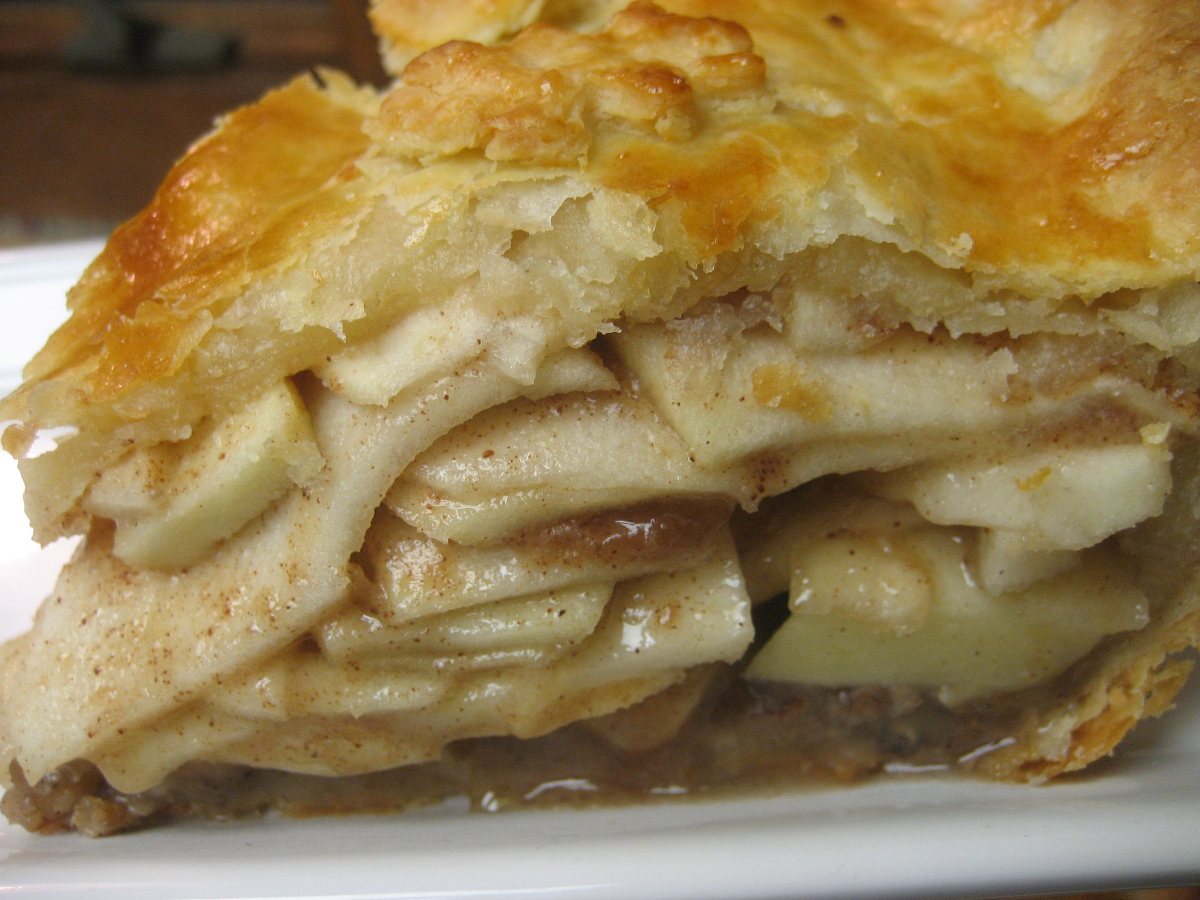
French Apple Pie
FAQ
What is the difference between apple pie and French apple pie?
A standard “apple pie” typically features a flaky, double crust, one on the bottom and one on top, enclosing the apple filling.
Does French apple pie have raisins in it?
Place one crust in a 9 inch pie pan. Mix apple slices and raisins and place in pie shell. Sprinkle with lemon juice. Mix remaining ingredients (not Icing) and sprinkle on top of apples and raisins.
What is the French name for apple pie?
French Apple Pie (Tarte Aux Pommes) This recipe is close to my heart for many reasons. First of all, it’s French. And I prefer calling it Tarte Aux Pommes rather than French Apple Pie …
What is the origin of French apple pie?
There is no single “French apple pie,” but rather several French apple tarts. The most famous is the Tarte Tatin, an upside-down caramelized apple tart accidentally created by the Tatin sisters in the late 1800s in the Loire Valley. Another traditional French apple dish is the rustic apple galette, a free-form tart that originated in Normandy centuries ago.