
Collard Greens are a flavorful, traditional Southern side dish slowly cooked until tender and amazing. This collard green recipe is perfect for New Year’s Day and as a delicious everyday side dish!
Hey there, food lovers! If you’ve ever tackled a pot of collard greens, you know they’re a Southern classic that can either steal the show or flop hard if you don’t get ‘em just right. These hearty, leafy greens got a rep for being tough and bitter straight outta the garden, but here’s where the magic kicks in—apple cider vinegar. Yup, that humble bottle of tangy goodness is the secret weapon to turn your collards from “meh” to “more, please!” So, why add apple cider vinegar to collard greens? Stick with me, and I’ll break it down real simple, with all the tips and tricks we’ve picked up over the years to make your greens the talk of the table.
Right off the bat, let’s hit the big reasons apple cider vinegar (or ACV, as I’ll call it) is a game-changer for collard greens. It balances that sharp bitterness mellows out salty flavors from meats like ham hock, and tenderizes those tough leaves into something downright silky. Plus, it adds a zesty punch that wakes up the whole dish. In this here article we’re gonna dive deep into each of these perks, chat about how it works its mojo, when to splash it in, and even some sneaky health benefits you might not expect. Let’s get cookin’!
Why Apple Cider Vinegar Is Your Collard Greens’ Best Friend
Collard greens, bless their soul, ain’t always easy to love at first bite. They’re packed with nutrients and got that earthy vibe, but without some help, they can taste like you’re chewin’ on grass with a bitter aftertaste. That’s where ACV struts in like a hero. Here’s why we swear by it at our kitchen table:
- Cuts Through Bitterness Like a Knife: Collards got a natural bite to ‘em, kinda sharp and in-your-face. A splash of apple cider vinegar smooths that out with its acidity, making the greens way more palatable. It don’t erase the flavor; it just dials it down to a level where you’re savorin’ instead of wincin’.
- Balances Salty Meats and Broth: Down South, we often cook collards with smoky ham hock, bacon, or other salty goodies. That “pot likker” (the broth left behind) can get real intense. ACV steps in to mellow that saltiness, givin’ you a dish that’s harmonious instead of a sodium punch to the face.
- Tenderizes Tough Leaves: Let’s be real—collard greens can be chewy as heck if you don’t cook ‘em long enough. The acid in ACV helps break down those fibrous cell walls, softening the greens into a texture that’s tender but still got a lil’ bite. Ain’t nobody got time for greens that fight back!
- Adds a Tangy Kick: Beyond fixin’ what’s wrong, ACV brings somethin’ extra—a bright, fruity tang that lifts the whole pot. It’s like a lil’ wake-up call for your taste buds, especially if your greens been simmerin’ with rich, heavy flavors.
I remember the first time I forgot the vinegar—man, them greens were a disaster. Bitter, tough, and just sad sittin’ on the plate. Once I learned this trick, it was like flippin’ a switch. So, trust me on this one; ACV ain’t just optional—it’s a must.
How Apple Cider Vinegar Works Its Magic
Alright let’s get a bit nerdy for a sec (don’t worry, I’ll keep it short). You don’t need a science degree to get why ACV does what it does but knowin’ a little helps you appreciate the wizardry. See, apple cider vinegar is loaded with acetic acid, which is the stuff that makes it sour. When you toss it into your pot of collards, a few cool things happen
- Breaks Down Fibers: That acid gets to work on the tough structure of the greens, sorta like a tenderizer for meat. It softens up the leaves by bustin’ up the cell walls, makin’ ‘em easier to chew and even helpin’ your body grab more nutrients from ‘em.
- Flavor Harmony: The acidity plays nice with the bitter compounds in collards, tonin’ ‘em down. It also cuts through the richness of fatty meats or salty broth, creatin’ a balance that hits all the right notes on your tongue.
- Keeps the Color Poppin’: Ever notice how greens can turn a dull, sad shade if you cook ‘em too long? ACV helps lock in that vibrant green by protectin’ the chlorophyll. Your dish don’t just taste good; it looks pretty on the plate too.
It’s like ACV is doin’ a triple duty—fixin’ texture, flavor, and looks all at once. Pretty dang impressive for somethin’ sittin’ in your pantry, right?
When and How to Add Apple Cider Vinegar to Your Collards
Now that you’re sold on why to use it, let’s talk about the how. Timin’ and amount can make or break your dish so listen up. I’ve burned through a few batches learnin’ this the hard way and I ain’t lettin’ you make the same mistakes.
- Add It Near the End: Here’s the golden rule—don’t dump ACV in at the start. If you cook it too long, that bright, tangy edge gets muddled, and you lose the punch. Wait ‘til your greens are just about done simmerin’, usually after 30-40 minutes if you’re braisin’ ‘em. Splash it in, let it cook for another 5 minutes or so to meld the flavors, and you’re golden.
- Start Small, Taste as You Go: ACV is strong stuff, y’all. Too much, and your greens taste like a pickle gone wrong. Begin with just a tablespoon for a big pot (servin’ 4-6 folks). Give it a stir, taste, and add more by the spoonful if you need it. I usually stop at 2-3 tablespoons max for a standard bunch of collards.
- Stir It In Good: Make sure that vinegar gets all up in there. Stir your pot well after addin’ it so every leaf gets a touch of that tang. Uneven flavor ain’t what we’re aimin’ for.
- Option to Serve on the Side: If you’re cookin’ for a crowd with picky eaters, consider settin’ out a lil’ bottle of ACV on the table. Folks can drizzle their own portion to taste. It’s a nice way to keep everyone happy.
Here’s a quick lil’ table to guide you on amounts based on your pot size:
| Collard Greens Amount | Suggested ACV Start | Max ACV (Adjust to Taste) |
|---|---|---|
| 1 bunch (about 1 lb) | 1 tablespoon | 2-3 tablespoons |
| 2 bunches (about 2 lbs) | 2 tablespoons | 4-5 tablespoons |
| Big pot (3+ lbs) | 3 tablespoons | 5-6 tablespoons |
Remember, these are just startin’ points. Your tongue’s the boss, so trust it over any chart.
What If You Ain’t Got Apple Cider Vinegar?
Run outta ACV? No sweat, we’ve got backups. While apple cider vinegar is my go-to for its sweet-fruity vibe that pairs so well with collards, other acidic goodies can step in and save the day. Here’s what you can swap with:
- White Vinegar: This one’s sharper and less complex, but it’ll still cut bitterness and soften leaves. Use a lil’ less than you would ACV—start with half the amount and taste, ‘cause it can be overpowerin’.
- Red Wine Vinegar: Got a deeper, richer tang to it. Works great if you want a bolder flavor twist. Again, start small; it’s got a strong personality.
- Balsamic Vinegar: This brings a sweet-tangy mix, almost fancy-like. It’s thicker, so a little goes a long way. Perfect if you’re feelin’ experimental.
- Lemon Juice: In a real pinch, a squeeze of fresh lemon can mimic that acidic bite. It won’t be as nuanced, but it’ll balance flavors and brighten things up. Use about the same amount as you would ACV.
Each of these swaps got its own flair, so play around and see what vibes with your palate. Just don’t skip the acid altogether—your collards will miss that lift.
The Health Bonus of Apple Cider Vinegar and Collard Greens
Now, let’s chat about somethin’ beyond taste. Collard greens and ACV ain’t just makin’ your mouth happy; they’re doin’ some good for your body too. I’m no doctor, but I’ve picked up a few tidbits over the years that make me feel even better about pilin’ this dish on my plate.
- Collard Greens Are a Nutritional Powerhouse: These greens are loaded, y’all. They’re burstin’ with vitamins like A, C, and K, which are awesome for your skin, immune system, and bones. Plus, they got fiber to keep things movin’ in your gut, and they’re low in calories if you’re watchin’ that.
- ACV’s Got Perks Too: Apple cider vinegar’s been hyped for ages as a health elixir. It’s got acetic acid that might help with digestion, keepin’ blood sugar steady, and even givin’ a lil’ boost to heart health. Some folks say it makes you feel fuller, which could help if you’re tryin’ to not overeat.
- Better Nutrient Grab: Here’s a neat trick—the acid in ACV can help your body soak up more of the good stuff from the greens, like calcium and iron. It’s like gettin’ an extra dose of nutrition without doin’ nothin’ special.
Of course, don’t go overboard with the vinegar ‘cause it’s acidic and too much ain’t great for your tummy or teeth. A splash here and there keeps it all in check. Pair that with the natural goodness of collards, and you’ve got a side dish that’s as nourishin’ as it is tasty.
A Lil’ Personal Story to Spice Things Up
I gotta share this—when I first started messin’ with collard greens, I was a hot mess in the kitchen. I’d boil ‘em to death ‘til they were mush, or forget any kinda seasonin’ and wonder why they tasted like cardboard. One Thanksgiving, my auntie pulled me aside, handed me a bottle of apple cider vinegar, and said, “Girl, don’t you dare serve them greens without this.” She showed me how just a lil’ splash at the end turned my sad pot into somethin’ folks were fightin’ over for seconds. That tang, that tenderness—it was a revelation. Since then, I’ve been preachin’ the ACV gospel to anyone who’ll listen. If I can go from kitchen flop to collard queen, so can you!
Extra Tips to Make Your Collards Shine
We’ve covered the why and how of apple cider vinegar, but lemme toss in a few more nuggets of wisdom to take your greens from good to great. These are the lil’ things I’ve learned from trial and error (and a whole lotta eatin’).
- Pick Fresh Greens: When you’re at the market, grab collards with crisp, dark leaves. Skip any that look wilted or yellowed—they won’t cook up nice no matter how much vinegar you add.
- Don’t Skimp on Washin’: Collards can be gritty as heck. Rinse ‘em under cold water, maybe even soak ‘em a bit, to get all that dirt off. Ain’t nothin’ worse than bitin’ into sand.
- Layer Flavors: Before the ACV, build a base with onions, garlic, and some smoked meat if you’re into that. Let them greens simmer in a tasty broth so the vinegar’s just the cherry on top.
- Pair It Right: Serve your collards with somethin’ hearty like fried chicken, smoked pork, or a big ol’ piece of cornbread. The combo of rich and tangy is

How to Cook the Best Southern Collard Greens
There are so many ways to cook collard greens, but this is the recipe that my family has loved for generations. Follow my step-by-step instructions for the best collard greens I think you’ll ever taste!
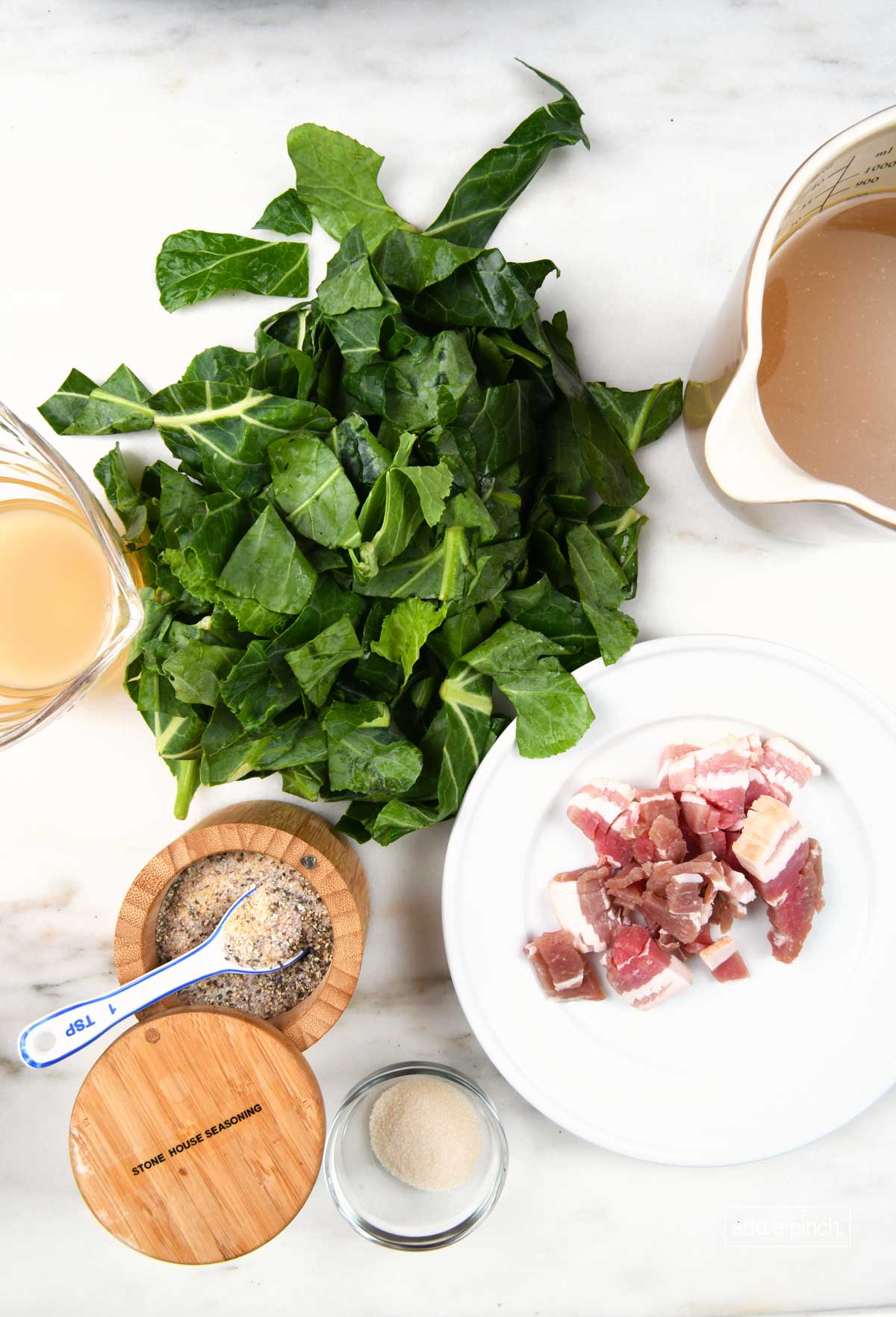
For my family’s recipe, you’ll need the following ingredients:
Collard greens: Also simply called “collards.” Fresh, washed, and cut greens are the best in my opinion. However, you can also use frozen if you’d like. I’ve used it many times when fresh collard greens were not in season or available.
Bacon: Adds a deep, smokey flavor to the cooked greens and provides the fat for cooking them.
Onion: This is an optional ingredient but adds incredible flavor.
Chicken stock: Adds a rich flavor. I prefer to use my homemade chicken stock, but I also love a great organic store-bought. You can also use chicken broth if you prefer.
Apple cider vinegar: Collards can be notoriously bitter. The vinegar balances the flavor and removes the bitterness.
Stone House Seasoning: My favorite house blend seasoning of garlic, salt, and pepper.
Sugar: A little bit helps remove any bitterness from the collard greens while giving a slightly sweet flavor. I also love to use maple syrup. You can omit if preferred.
Hot sauce: If you like spicy collard greens, you can add them to the pot as they cook or serve the hot sauce alongside the greens when you serve them. I prefer to serve them alongside since some people love them spicy while others do not.
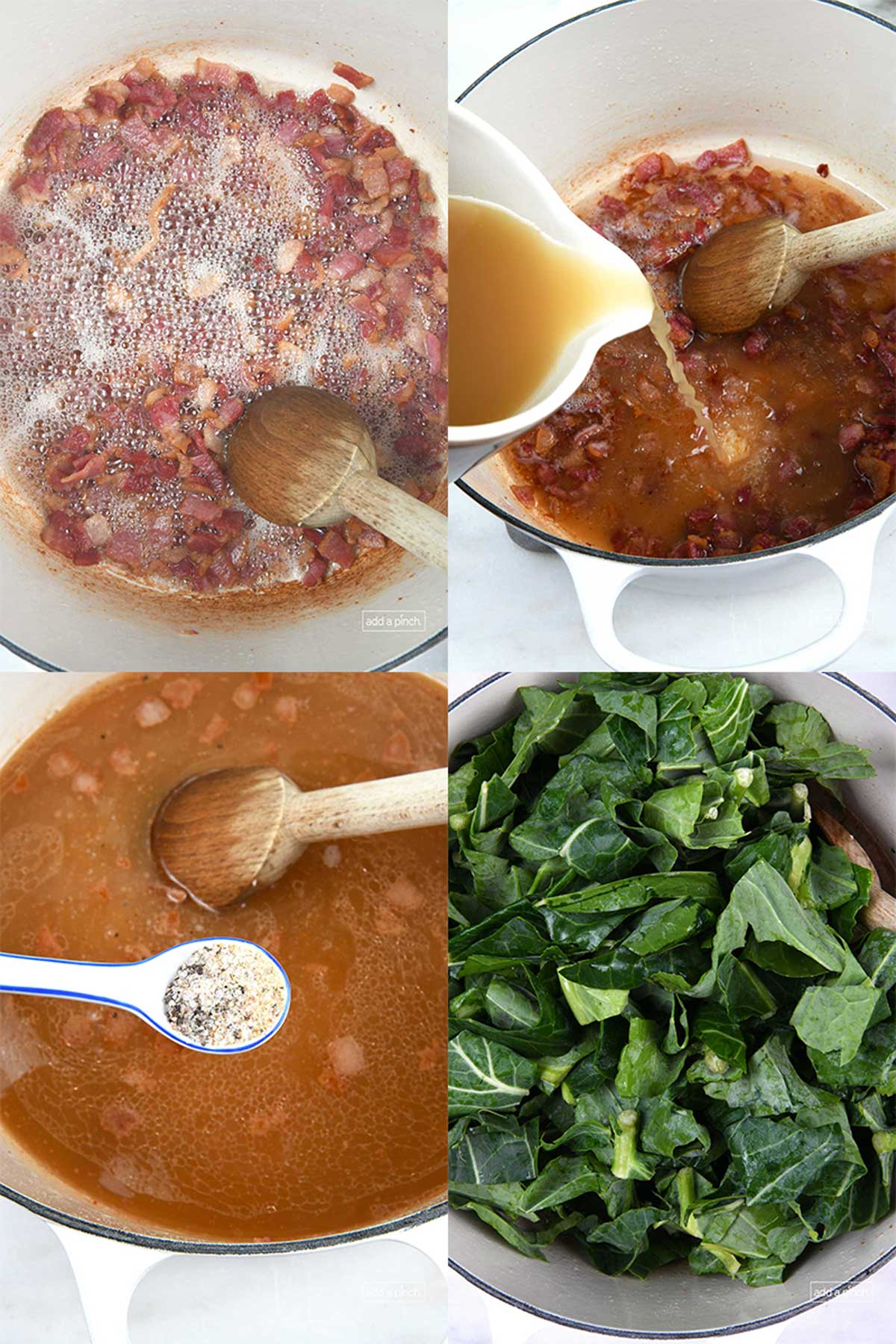
Cook bacon and onion. Cook bacon and onion (if using) in a large stockpot or Dutch oven until the bacon is crispy.
Add chicken stock. Pour in the chicken stock and stir to combine.
Add vinegar and other seasonings. Pour in the apple cider vinegar, sugar, and Stone House Seasoning.
Add collard greens. Add collards and cover them with a lid to the stockpot. If all of the greens will not fit at the beginning of cooking the greens, add as many as will fit, stir and cover the stockpot. Then, add the remaining greens once those have cooked down. They wilt rather quickly, so you should be able to add them in just a minute or so.
What to Serve with Collard Greens
New Year’s Meal. They are delicious served for special occasions like as part of the traditional Southern New Year’s meal. Collards are said to represent prosperity and money in the new year. In that meal, they are served with black eyed peas, mashed potatoes, cornbread or cornbread muffins, and some type of pork such as ham, pork roast, or even pork tenderloin.
Everyday meal. We also love them as part of an everyday meal. Then, I love to have them with roast beef and mashed potatoes. They are also delicious with our smoked turkey and red beans and rice!
Why do you put vinegar in collard greens?
FAQ
What does apple cider vinegar do for collard greens?
I also add apple cider vinegar to my collard greens. Vinegar helps to tenderize the greens a bit more, while the apple cider gives it another depth of flavor.Apr 24, 2021
Why do people put vinegar in their collard greens?
Why do you put vinegar in collard greens? Vinegar brings a welcome tang to this recipe and helps brighten this dish by balancing out the salty and savory earthiness of the collards. Vinegar will also help tenderize the collards.
What’s the secret to good collard greens?
- Wash the greens well. Be sure to clean your collard greens thoroughly before cooking.
- Monitor the liquid level. If the pot looks dry, add more broth as needed.
- Adjust the heat level. If you want more of a kick in your collard greens, feel free to add more red pepper flakes or your favorite hot sauce.
How much vinegar do I add to my collard greens?
Add 4 cups of chicken broth, 1 teaspoon of smoked paprika, 1/2 teaspoon of red pepper flakes (optional for heat), and 1 tablespoon of vinegar. Add the chopped collard greens to the pot, stir to combine, and bring the mixture to a simmer.