When you’re out at the farmers’ market or in the supermarket, does it make a difference which kind of apples you buy for preparing whole baked apples? Are some apples–like some potatoes–better suited for baking whole than others?
The answer is yes! After conducting informal comparison bake-offs of different varieties over several autumns, I’ve determined that some apples make beautiful and delicious whole baked apples and others don’t. One result may totally surprise you–the Granny Smith doesn’t look or taste good baked whole. (Check out the pic below for the proof!) If you are looking for a super good and easy recipe for whole baked apples go here.
The basket above contains one of my favorite old-fashioned baking apples, the Jonathan. When you can find them, they are delish right off the tree, or cooked or baked. Their only drawback is that they are somewhat hard to find, and they tend to be smallish so when baked whole the finished servings are on the modest side.
As I learned from extensive comparison testing, some baked apples come from the oven temptingly colored, nicely shaped, and with full-bodied fruit flavor and aroma. Others emerge looking a bit slumped and faded, but tasting appetizing. Still other kinds emerge bland, limp, or mushy, or all three. Though you might (rightly) guess that very crisp, tangy, intensely flavored apples are the best candidates for making whole baked apples, not all the varieties in this category actually do perform well. The Granny Smith, as you’ll discover below, was a dud!
It’s common for recipes simply to call for “baking apples,” or “tart apples,”or “large apples,” which is not really helpful! Occasionally they specify Granny Smith or Golden Delicious or Rome; a few suggest McIntosh. So I tried all four–and not all made good baked apples at all! (BTW, when you want “baked” apples in a hurry, try my handy –and yummy Microwave-Baked Apples.)
Here are the results of my comparison bake-off: The Rome apples held their shape, although the skins tended to split and lost a lot of the original pretty red color. The flesh tasted pleasantly tart.
The McIntosh apple, shown below, split apart and completely collapsed; they were not attractive baked apples at all! Their flesh softened to the point that an actual applesauce bubbled out the center tops. (No wonder they are often called applesauce apples.)
The Golden Delicious were okay, but not at their best either. They kept some shape, but their handsome yellow skin faded a bit. They tasted good as baked apples, but I felt that baking muted the tantalizing fruity-sweet flavor that’s the best feature of these apples.
The Granny Smith apples were a surprise–and not in a good way! Baking seemed to bring out their usual tartness (make that sourness), but not their flavor. Plus, they collapsed completely, and their skins turned a homely olive drab as you can see in the pic at right.
So, I set out to find varieties that would make better whole baked apples. Eventually, I tried over 30 different kinds (above are some of the choices shown being baked)–carefully labeling each type to keep the contestants straight. I baked them all in the same kind of dishes, with the same recipe, in the same oven. I always tested two of each type at once, to be sure the results were characteristic and not a fluke.
Every apple was sampled and informally rated by two or three tasters.The details are in, and there is not one all-out favorite, but several “best bakers” available this time of year. They are listed below, along with my comments and testing notes. Additionally, I’ve mentioned a number of other varieties that bake up nicely and are well worth trying—some of these may be hard to find.
In case you don’t see your favorite apple suggested, there are several possible reasons. In general, most of the popular eating apples–Red Delicious, Gala, and Fugi, for example–simply don’t stand up to the heat. A lot of their appeal comes from their mild taste, lack of acidity, and gratifying crispy texture. Baking tends to negate these qualities. Plus, not only the McIntosh but the Cortland and Macoun (both crosses of McIntosh with other apples) tended to break down when baked whole, although their flavor was pleasant. Of course, if you grew up enjoying these varieties, their applesaucy consistency may strike you as just the way baked apples should be!
A while back, I invited Guy Raz, host of NPR Weekend All Things Considered to come to my kitchen and do an apple comparison tasting. You can catch the short interview and find out what apples Guy liked best here. Tip: Cinnamon and sugar can’t save apples that are past their prime. (Once picked, store apples in the coldest part of the refrigerator; experts say 33 degrees F. will keep them at their best.) Even highly recommended kinds won’t come out succulent and full of flavor unless they go in the oven that way. And speaking of the oven, if you prefer your baked apples in a crisp, check out my favorite
Hey there, fellow baking enthusiasts! If you’ve ever wondered “Are Rome apples good for baking?” then you’re in for a treat with this deep dive. I’m gonna spill the beans on why these apples have been crowned the “Queen of Baking Apples” and whether they’re worth huntin’ down for your next pie or dessert. Spoiler alert they’re pretty darn amazing and I’ve got the deets to prove it. So, grab a cup of coffee, and let’s chat about Rome apples and how they can level up your baking game!
Why Rome Apples Rock for Baking
Let’s cut straight to the chase—Rome apples are fantastic for baking, and there’s a reason they’ve got a royal nickname. These babies have a thick skin that helps ‘em hold their shape when you pop ‘em in the oven. Whether you’re making a classic apple pie, some gooey baked apples, or even apple muffins, Rome apples don’t turn to mush like some other varieties. That’s a huge win when you want that perfect texture in your desserts.
Their flavor? Oh man, it’s like the Goldilocks of apple tastes—not too sweet, not too tart, just right with a mild tangy kick and a hint of floral vibes. It’s no wonder they’re still one of the top-sellin’ apples in the US, even with all the fancy new varieties out there. When I first tried baking with Rome apples, I was blown away by how they kept their form in a pie while still gettin’ soft enough to melt in your mouth. Absolute magic!
Here’s why they’re a baker’s best friend:
- Shape Retention: That thick skin means they don’t fall apart durin’ baking—perfect for whole baked apples or chunky pie fillings.
- Balanced Flavor: Mildly sweet with a tangy edge, they pair awesome with cinnamon, sugar, and butter without overpowerin’ the dish.
- Versatility: From fried apple slices (think apple onion rings, y’all!) to apple dumplings, they work in a ton of recipes.
So, if you’re askin’ if Rome apples are good for baking, my answer is a big, fat YES! But, there’s more to the story, so stick with me.
A Lil’ History on Rome Apples—They’re Old-School Cool
Now, let’s take a quick trip back in time ‘cause I think knowin’ where these apples come from makes ‘em even cooler. Rome apples, sometimes called Red Rome or Rome Beauty, got their start way back in the early 1800s in Ohio. A dude named Joel Gillet found a random seedling on his land in Rome Township, planted it, and a few years later, bam—tasty apples! His cousin took some cuttings, grafted ‘em, and soon enough, the whole area was crazy about this new variety.
Back then, there were thousands of apple types across the States, but Rome apples stood out with their bright red color, softball-like size, and sweet flavor—traits that were kinda rare for apples at the time They became a local fave, and by the 1900s, folks were callin’ ‘em the Queen of Baking Apples. Pretty neat, right? I love thinkin’ about how our great-grandparents mighta been baking with the same kinda apple I’m usin’ today. It’s like a lil’ connection through food!
How to Use Rome Apples in Your Kitchen
Alright, let’s get down to the nitty-gritty—how do ya actually use Rome apples for baking? I’ve got some killer ideas that’ll make your mouth water just readin’ ‘em. These apples shine in recipes where you want the apple to stay intact or hold up under heat. Here are my go-to ways to use ‘em:
- Baked Apples: Core out the middle, stuff ‘em with a mix of sugar, cinnamon, butter, and maybe some chopped nuts or honey, then bake ‘til they’re soft and gooey. It’s like a personal apple pie without the crust—perfect for a cozy fall dessert. Pro tip: If you’re feelin’ fancy, stuff ‘em with a cheesecake filling. Trust me, it’s next-level!
- Fried Apple Slices: Slice ‘em thin, dip in a light batter, fry ‘em up, and dust with cinnamon sugar. Dip in caramel or chocolate sauce for a treat that’s like apple donuts. I made these for a family gatherin’ once, and they were gone in minutes!
- Apple Pies and Tarts: Their firmness makes ‘em ideal for pies where you want defined apple chunks. Mix with a bit of lemon juice and spices, and you’ve got a filling that won’t turn to applesauce in the oven.
- Muffins and Cakes: Dice ‘em up and fold into batter for muffins or spice cakes. They add a nice bite and subtle sweetness that ain’t overpowering.
One thing I’ve noticed is that Rome apples ain’t the best for stuff like applesauce ‘cause they don’t break down super easy. If you’re lookin’ for a mushy texture, you might wanna save ‘em for somethin’ else and grab a softer variety. But for most baked goods, they’re a solid pick.
A Quick Recipe to Try: Classic Baked Rome Apples
I figured I’d share a super simple recipe to get ya started with Rome apples. This is my go-to for baked apples, and it’s stupid easy to whip up on a chilly evening.
Ingredients (for 4 servings)
- 4 Rome apples (or similar baking apples if ya can’t find ‘em)
- 4 tablespoons brown sugar
- 2 teaspoons cinnamon
- 4 tablespoons butter (cut into small chunks)
- A handful of chopped walnuts or raisins (optional)
- A drizzle of honey (optional, but oh so good)
Steps:
- Preheat your oven to 375°F (190°C). Grab a baking dish that’ll fit your apples snugly.
- Wash and core the apples, leavin’ the bottom intact so the fillin’ don’t leak out. I use a lil’ spoon or apple corer for this—works like a charm.
- Mix the brown sugar and cinnamon in a small bowl. Stuff about a tablespoon of this mix into each apple, then top with a chunk of butter. Toss in some walnuts or raisins if you’re usin’ ‘em.
- Place the apples in the dish, drizzle with a tiny bit of honey if ya want extra sweetness, and pour a splash of water (like ¼ cup) into the bottom of the dish to keep ‘em moist.
- Bake for 40-50 minutes or ‘til the apples are tender when you poke ‘em with a fork. Let cool a bit, then dig in—maybe with a scoop of vanilla ice cream if you’re feelin’ decadent!
This recipe is a crowd-pleaser, and it really shows off how Rome apples keep their shape while gettin’ all soft and flavorful. I’ve made this a buncha times, and it never fails to impress.
But Wait—Are Rome Apples Hard to Find?
Now, here’s where things get a bit tricky. You mighta noticed that Rome apples ain’t as common on grocery store shelves as some other types like Honeycrisp or Granny Smith. And there’s a reason for that. The trees these apples grow on are super prone to diseases—think stuff like scab, fire blight, and rust. That makes ‘em a pain for growers, especially small-scale or home orchard folks, ‘cause the trees might not live long or produce well.
Back in the day, Rome apples were a big deal for commercial orchards ‘cause they gave huge yields—some even called ‘em a “mortgage maker.” But with newer apple varieties that are easier to grow and just as tasty for baking, they’ve kinda taken a backseat. I remember huntin’ for Rome apples at my local market a while back and comin’ up empty-handed. It was a bummer, but I learned a few tricks to track ‘em down.
If you’re set on usin’ Rome apples, check out local nurseries or farmers’ markets, especially in the fall. Sometimes they go by “Rome Beauty,” so keep an eye out for that name too. If you’re strikin’ out in person, look online—there are places that ship apple trees or even the fruit itself. Worst case, if ya can’t find ‘em, don’t sweat it—I’ve got some awesome alternatives comin’ up next.
Best Alternatives to Rome Apples for Baking
So, what do ya do if Rome apples are nowhere to be found? Don’t worry, we’ve got options that’ll still make your baked goods sing. The key is to pick apples that have a similar firmness and a nice balance of sweet and tart flavors. Here are my top picks for baking apples that can step in for Rome apples:
- Honeycrisp: These are like the all-star of apples—great for eatin’ raw and bakin’. They’ve got a crisp texture and a sweet-tart vibe that works awesome in pies and crisps. I’ve used ‘em in apple tarts, and they hold up real nice.
- Granny Smith: If ya like a bit more tartness, Granny Smiths are your go-to. They’re super firm, so they don’t turn to mush, makin’ ‘em perfect for pies and cobblers. I mix ‘em with a sweeter apple sometimes to balance things out.
- Pink Lady: These apples are sweet with a lil’ tang and stay firm when baked. They’re a solid choice for anything from apple cakes to baked apples. I’ve tossed ‘em into a crumble before, and they were delish.
- Golden Delicious: Another classic, these are softer than Rome apples but still good for baking if ya don’t overcook ‘em. They’ve got a mellow sweetness that’s great in muffins or quick breads.
Here’s a lil’ table to compare these options at a glance:
| Apple Type | Flavor Profile | Texture When Baked | Best For |
|---|---|---|---|
| Rome | Mildly sweet, tangy | Firm, holds shape | Baked apples, pies, fritters |
| Honeycrisp | Sweet-tart, full-bodied | Crisp, holds shape | Pies, tarts, crisps |
| Granny Smith | Tart, acidic | Very firm | Pies, cobblers |
| Pink Lady | Sweet with slight tang | Firm | Cakes, baked apples |
| Golden Delicious | Mildly sweet | Softer but holds okay | Muffins, quick breads |
I’ve baked with all these varieties at some point, and while Rome apples have a special place in my heart, these others ain’t slouches. If you’re experimentin’, try mixin’ two types together—like Granny Smith with Golden Delicious—for a killer flavor combo in your pie.
Tips for Baking with Apples (Rome or Otherwise)
Whether you’ve scored some Rome apples or you’re usin’ a substitute, I wanna share a few tips I’ve picked up over the years to make sure your baking turns out top-notch. These lil’ nuggets of wisdom have saved my butt more than once in the kitchen!
- Pick Firm Apples: Always go for apples that feel hard when ya squeeze ‘em. Soft or mealy ones will just disintegrate when baked, and nobody wants a soggy mess.
- Don’t Overcook: Even firm apples like Rome can get too soft if ya leave ‘em in the oven too long. Check ‘em a few minutes before the recipe says they’re done—just poke with a fork to see if they’re tender yet.
- Add a Splash of Acid: A squeeze of lemon juice or a dash of apple cider vinegar can brighten up the flavor of your apples and keep ‘em from brownin’ too quick while ya prep.
- Store ‘Em Right: If ya ain’t usin’ your apples right away, keep ‘em in the fridge’s crisper drawer. Rome apples can last a good 3-5 months in cold storage if ya don’t wash ‘em ‘til you’re ready to eat or bake. Room temp speeds up the aging, and trust me, a shriveled apple ain’t cute.
- Peel or Not to Peel?: For pies and stuff, I usually peel ‘em for a smoother texture, but for baked apples, leavin’ the skin on looks rustic and holds everything together. Up to you!
I’ve messed up plenty of times by not followin’ these—like the time I left apples out on the counter for a week and they got all wrinkly. Lesson learned the hard way, folks!
Why You Should Give Rome Apples a Shot
Even with the hassle of findin’ ‘em sometimes, I think Rome apples are worth the effort if ya can get your hands on ‘em. There’s somethin’ special about usin’ an heirloom variety that’s been around for over a century. It’s like bakin’ with a piece of history, ya know? Plus, their ability to hold shape while still gettin’ soft and flavorful makes ‘em a standout for so many recipes.
I remember one fall when I stumbled on a small batch of Rome apples at a local orchard. I snagged a few, baked ‘em up with some cinnamon and honey, and it was like a hug in dessert form. That experience made me a fan for life, and I’ve been on a mission to spread the word about these underdog apples ever since.
Wrappin’ It Up—Rome Apples and Baking Bliss
So, are Rome apples good for baking? Heck yeah, they are! With their firm texture, balanced sweet-tangy taste, and historical charm, they’re a fantastic choice for all sorts of baked goodies—from pies to whole baked apples. Sure, they might not be as easy to find as some other varieties due to their fussy trees, but when ya do spot ‘em, they’re worth grabbin’. And if ya can’t find ‘em, no biggie—Honeycrisp, Granny Smith, and Pink Lady have got your back.

Best Apples for Making Whole Baked Apples
Empire–This is a cheerful red, sweet-tart apple. It’s s a cross between McIntosh and Red Delicious and a far better baker than either of its parents. The skin turns an attractive, though unusual pinkish-red when baked, and the flesh usually holds together and wins points for its honest, gratifying fruit flavor. The apples range from medium-large to large.
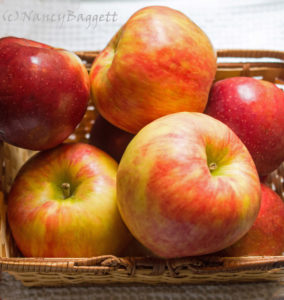 Honeycrisp –A 1960s Minnesota introduction that’s descended from Macoun, Golden Delicious, and Haralson apples, this large, super-crisp, and sweet yet tangy variety is shown in the basket at left. The Honeycrisp holds its shape fairly well when baked, and its reddish-yellow skin takes on an attractive tawny-gold hue. As the name suggests, the flesh also has a faintly golden color and a memorable sweet and mellow flavor. This is one of the best choices for make whole baked apples–it’s my fave.
Jonathan–This old favorite (shown in the top left of the basket with Honeycrisp at left) doesn’t hold its shape as well as some other varieties during baking, but its complex sweet-tart flavor comes through clearly, so it gets a top rating for taste. The reddish skin retains some color, another plus, though it is slightly tough. One drawback for those who prefer their baked apples large is that Jonathans are rarely more than medium-sized, 5 to 7 ounces each.
Rome–Also called Red Rome and Rome Beauty, this bright red apple is recommended primarily because it’s very large (sometimes huge!) and impressive looking, and its zesty-tart flesh maintains its integrity during baking. However, the skin does fade to russet-red and may split; sometimes it also becomes a little tough. The apple flavor is not complex, but quite zesty, which complements the classic brown sugar-cinnamon combo nicely.
Braeburn- A New Zealand apple from a chance seedling discovered in an orchard of the same name in 1952, the Braeburn is good for baking whole, as the pic at the bottom left indicates. It looks attractive, and also has a pleasant middle-of-the-road apple flavor, especially when very fresh. It is usually 7 to 9- ounces, which yields a medium-sized baked apple. These are featured in my 2-ingredient, 10-minute microwave baked apple recipe here. The exact parentage of Braeburn apples is unknown but they are believed to be a relative of the Lady Hamilton and Granny Smith apple, both varieties which were growing in the orchard where the Braeburn apple was first discovered – See more at: http://www.specialtyproduce.com/produce/Braeburn_Apples_673.php#sthash.prsTdJvI.dpuf The exact parentage of Braeburn apples is unknown but they are believed to be a relative of the Lady Hamilton and Granny Smith apple, both varieties which were growing in the orchard where the Braeburn apple was first discovered – See more at: http://www.specialtyproduce.com/produce/Braeburn_Apples_673.php#sthash.prsTdJvI.dpuf
Honorable mentions: Cameo, Crispin, Gravenstein, Jonagold, Nittany, Pacific Rose, Paula Red, Green Pippin, Sansa, Stayman, and Summerfield.

Welcome to KitchenLane! It’s a comfortable place where I create, thoroughly test, and photograph recipes for my cookbooks and blog. All my recipes are original, not adaptations from others. I trained as a pastry chef, so many offerings are desserts and baked goods. Some are also healthful, savory dishes I contribute to healthy eating publications. My recipes are always free of artificial dyes, flavorings, and other iffy additives, which I won’t serve my family—or you! Instead, dishes feature naturally flavorful, colorful ingredients including fresh herbs, berries, edible flowers, and fruits, many from my own suburban garden or local farmers’ markets. Since lots of readers aspire to write cookbooks, I also blog on recipe writing and editing and other helpful publishing how-to info accumulated while authoring nearly 20 well-received cookbooks over many years.
The Art of Cooking with Lavender
The 2 Day A Week Diet Cookbook Now available on Amazon!
The All-American Dessert Book
The All-American Cookie Book
Nancy Baggett’s Food Network Gingerbread Demo!
Watch demo HERE. Find Cookie Recipe HERE.
Apples 101 – About Rome Apples
FAQ
What are Rome apples best used for?
It is primarily used for baking, as its flavor develops when cooked, and it holds its shape well.
What apples are best for apple baking?
The best apples for baking are firm varieties like Granny Smith, Honeycrisp, Braeburn, and Jonagold, as they hold their shape and texture during the cooking process. For pies, using a mix of tart and sweet firm apples, such as a combination of Granny Smith with a sweeter apple like Golden Delicious or Honeycrisp, can create a balanced flavor and ideal texture.
Can you bake with Rome apples?
Yes, Rome apples are excellent for baking because their firm flesh holds its shape well during cooking, and their flavor intensifies and develops richness when heated, making them a versatile “baking apple” for pies, crisps, sauces, and baked apples. They are sometimes nicknamed the “Queen of Baking Apples” or “Baker’s Buddy” for their ability to remain firm and not become mushy when cooked.
Are Rome apples good for apple pie?
Yes, Rome (or Rome Beauty) apples make excellent pie apples because they hold their shape and have a rich, sweet-tart flavor that intensifies during baking. They are known as a favorite among bakers for their delicious, firm-but-soft texture, though a mild flavor profile means some bakers prefer to mix them with a more flavorful apple, like Jonagold, for a richer result.